 Sign inSet up your brand
Copywriting platform · built for regulated brands
Write the copy.
Check it against your rules as you go.
Load your brand guidelines and the regulations you work under. Inkstand drafts rules from them for you to approve, then checks drafts against them.
Your brand set up in about five minutes
An animation of the editor. It opens on a release being refused: the headline “Six weeks of this will cure your fatigue.” is marked on the word “cure”, a blocking finding stands against the rule “Do not claim anything cures a condition”, and the release is held. The headline then clears and retypes itself, and the same finding lands again on the same word.
You bring
Your brand guidelines
Tone, claims, the words you never use. From the brand book you already have.
And
The rules you work under
ABPI, FCA, ASA, your own SOPs. Read from the source documents, not retyped.
You get
Copy checked as you work
Run Check to see the findings. Smaller documents can also update as you type.
Two studios. One writes prose, one builds frames.
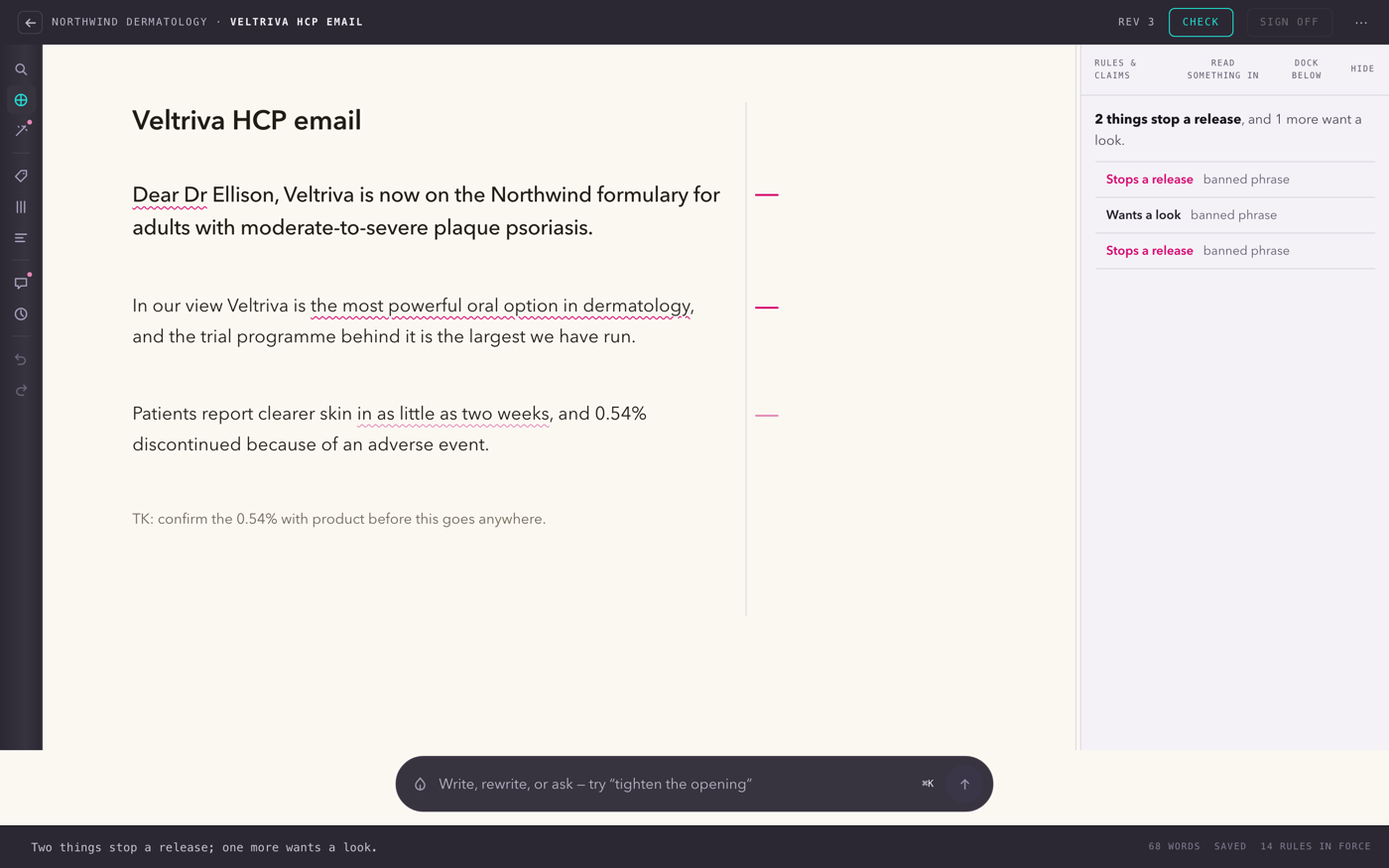 Copy StudioDescribe the email, then tighten the opening, cut a paragraph or change the register. Check each version against your rules.Emails · letters · releases
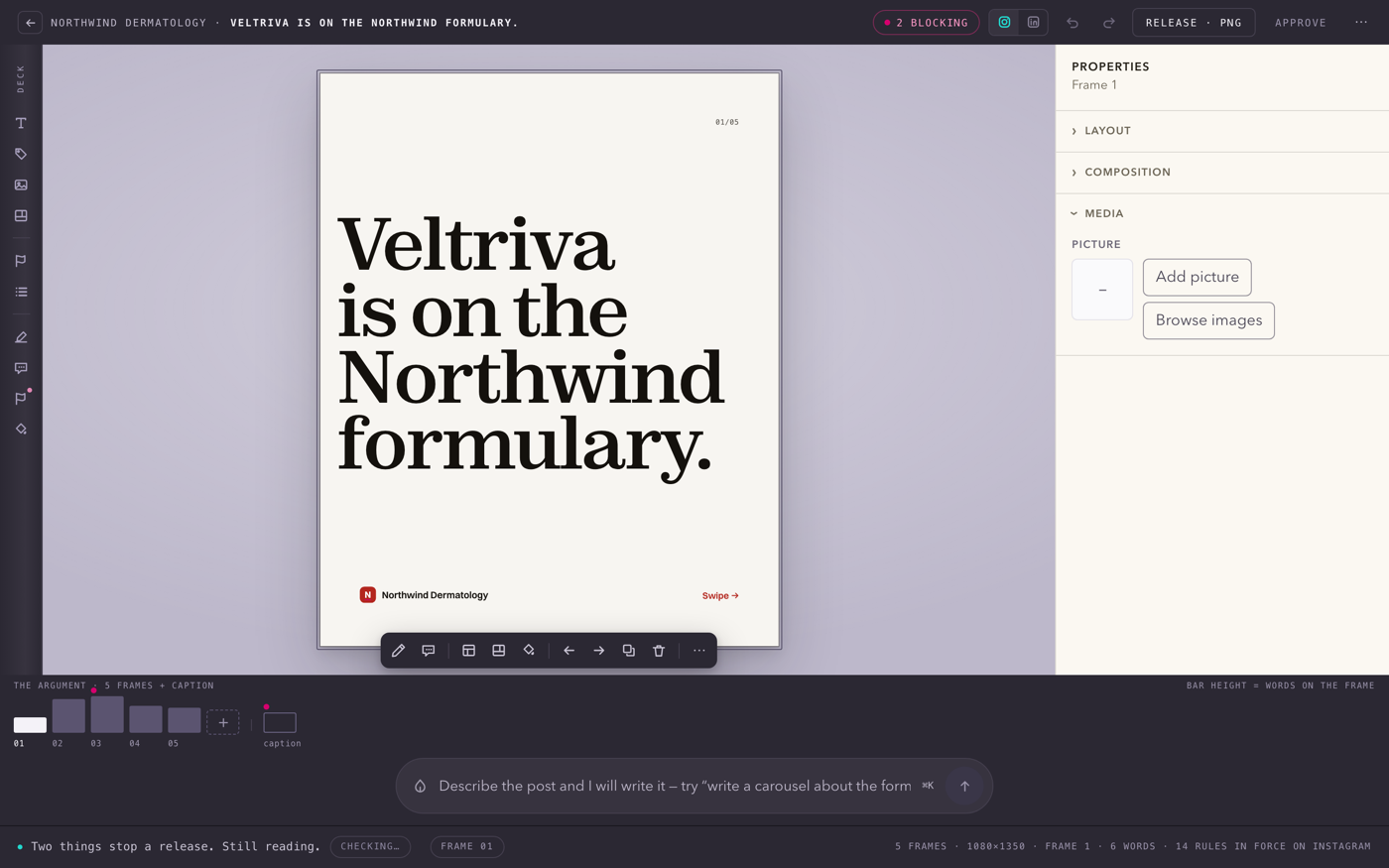 Carousel StudioOne line in, five frames out — your typefaces, your colourway, your marks. Reorder them and the artwork keeps up. Export the PNGs.Posts · carousels · stories
See each problem on the words it affects.
Veltriva is the most powerful oral option and clears skin in as little as two weeks.
Veltriva is a first-line oral option and skin may improve over time.
In this example, two rules flag claims and suggest replacements.
Set one account rule. Every brand inherits it.
You set a rule
“Never claim superiority over a named comparator.”
ABPI 4.2 · adopted by you · fired 7 times
Your team inherits it